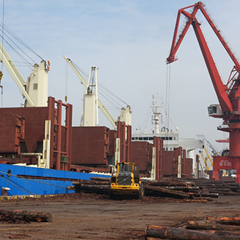
The National Forestry and Grassland Work Conference was held in Beijing on January 15. The conference announced that in 2025, China continued to advance the reform of the collective forest tenure system and high-quality development of the forestry and grassland industry. The national forestry and grassland industry output value approached 11 trillion yuan, with the total import and export trade volume of forest products exceeding 180 billion U.S. dollars. Annual forest food production reached over 240 million metric tons.
In 2025, forestry and grassland departments continued to revitalize and optimize the use of forest and grassland resources, actively promoting the healthy development of the forestry and grassland industry. They jointly issued the Notice on Financial Support for High-Quality Forestry Development, guiding financial resources to flow into forests. Several measures were introduced to promote the development of the under-forest economy, providing systematic support across eight aspects including land use, forest use, investment, and technology to offer full-chain guarantees for accelerating under-forest economic development. Annual timber production reached 140 million cubic meters, with the output value of timber processing and wood/bamboo product manufacturing reaching 3.4 trillion yuan. The central government allocated 4.8 billion yuan in rewards and subsidies for the camellia oleifera industry. Throughout the year, 2.82 million mu (188,000 hectares) of new camellia oleifera plantations were established, and 2.56 million mu (171,000 hectares) of low-yield forests were improved. The national camellia oleifera planting area reached 75 million mu (5 million hectares), with tea oil production reaching 1.1 million metric tons. Active support was provided for improving the quality and efficiency of forest tourism and forest wellness industries, with ecotourism receiving nearly 3 billion tourist visits annually. The supporting capacity of the four pillar industries—wood/bamboo processing, economic forests, under-forest economy, and ecotourism—continued to strengthen. The national forestry and grassland industry directly employed over 60 million people, with its role in empowering income growth and stabilizing employment becoming increasingly evident.
Meanwhile, multiple measures were implemented to deepen the reform of the collective forest tenure system, focusing on improving the quality and efficiency of collective forestry development. Ten measures were formulated to support pilot initiatives for collective forest tenure reform, optimizing public welfare forest management and collective forest harvesting approval policies. Joint pilot programs were launched to improve the quality and efficiency of forest rights registration, clearing up historical legacy issues in forest rights confirmation and registration, and resolving 95,000 cases of multiple certificates for the same plot of land. The Measures for the Administration of Collective Forest Land Management Rights Transfer were issued, comprehensively standardizing the transfer of forest land management rights, accelerating the transition of collective forestry toward large-scale and intensive management. To date, there are nearly 300,000 new-type forestry business entities, with approximately 100,000 large-scale business entities operating 500 mu (33 hectares) or more.
Moving forward, forestry and grassland departments will thoroughly implement the concept that "lucid waters and lush mountains are invaluable assets," strive to explore new pathways for realizing the value of ecological products, persistently use reform-based approaches to activate forest and grassland resources, accelerate the transformation and upgrading of the wood and bamboo industries, vigorously develop woody grain and oil, under-forest economy, and other characteristic industries, actively cultivate new industries and new business formats, and work to expand and strengthen the forestry and grassland industry. They will continue to deepen the reform of the collective forest tenure system, further liberalize collective forest management rights, cultivate and expand new-type business entities, and promote moderate-scale management in collective forestry. Fiscal, tax, and financial support will be strengthened, diversified investment mechanisms will be improved, multi-stakeholder interest linkage mechanisms will be promoted, and further momentum for forestry and grassland industry development will be activated. The "second half" of the reform in key state-owned forest areas will be well addressed to promote economic transformation and green development in forest regions. Modern state-owned forest farms will be built at an accelerated pace, and state-owned forest farms with suitable conditions will be supported to develop characteristic industries such as nursery stock and forest tourism according to local conditions.
(Source: National Forestry and Grassland Administration)


 入会申请
入会申请 Lang:
Lang: